Refinery
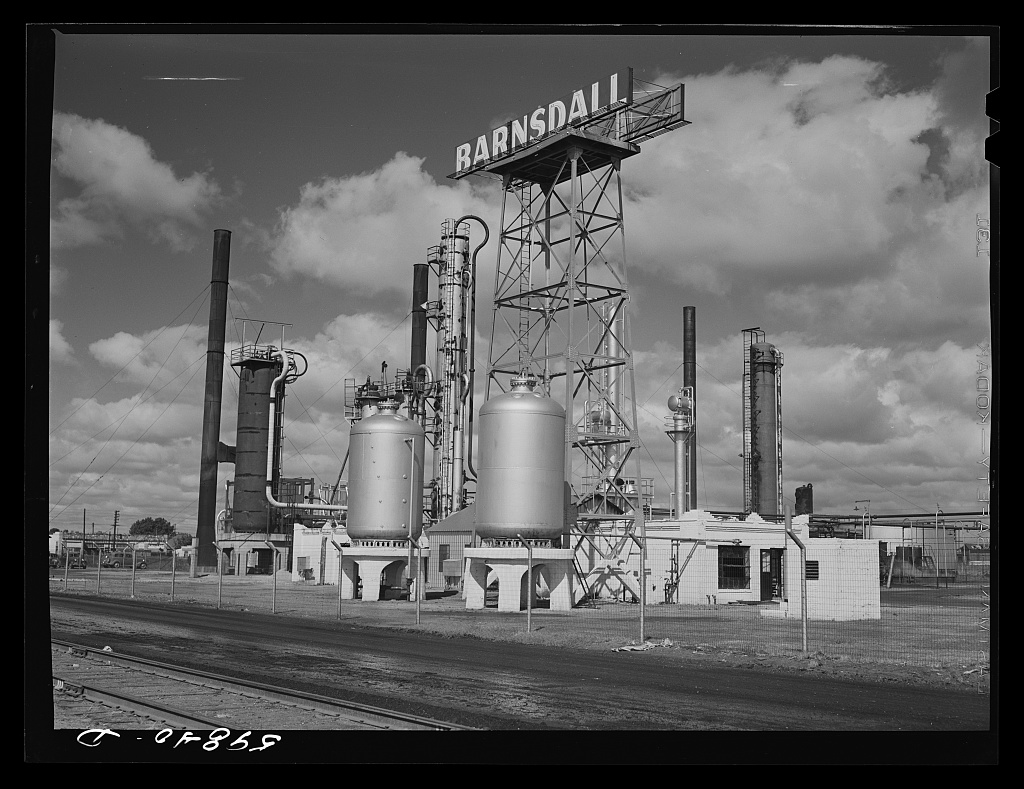
A refinery is a place. The asset is identified by its physical site — latitude, longitude, and canonical name — and its identity persists across the ownership changes, the configuration changes, and the regulatory changes that move around it over time. The schema follows the place, not the company that happens to own it this year.
Three California refineries make the point. Marathon Martinez, on the Carquinez Strait in Contra Costa County, ran for decades as a conventional petroleum refinery. Marathon Petroleum then converted it. As of 2024 the same site runs as a 47,500-barrel-per-day renewable-fuels facility with a Nelson Complexity Index of three, charging soybean oil, tallow, used cooking oil, and distillers corn oil rather than crude oil.1 Forty miles south, Phillips 66 Rodeo made the same move and is now the largest renewable-fuels facility in the world.2 Meanwhile, in Wilmington, the Phillips 66 Los Angeles Refinery — 139,000 barrels per day, Nelson Complexity 14.2 — was announced for closure in 2024 and shut down by the end of 2025; the site will be redeveloped.3
The schema has one row for each of these three sites, and it has had one row for each across each of these changes. The operator did not change. The configuration changed at Martinez and Rodeo; the status changed at Los Angeles. The site, in each case, is the same site. The lat/long is the same. The canonical name is the same. The schema follows the site.
The mechanism is simple. The asset is one class; the legal entity that runs it is another. An Operator row attaches to a Refinery with effective dates. A ParentCompany attaches to the Operator. When an ownership change happens, a new Operator row is appended and the prior operator's row is given an end date. The Refinery row itself does not change. The corollary holds when an operator merely reconfigures the asset: a new ProcessUnit inventory is recorded, the status field is updated, and the Refinery row continues. The schema has memory.
This is a deliberate departure from the way most public refining databases store the same facts. Wikipedia and the trade press routinely identify a refinery by its operator: "Marathon Galveston Bay" or "ExxonMobil Baytown." The convention is convenient and it is wrong. It silently breaks when the operator changes. The U.S. Energy Information Administration, in Form 820, identifies refineries by site, not operator.4 The schema follows the regulator.
The Refinery class is therefore the seed of the rest of the ontology. ProcessUnit rows describe the units the refinery operates — the crude distillation, the vacuum tower, the fluid catalytic cracker, the coker, the hydrocrackers and hydrotreaters, the reformer, the alkylation unit. IncidentReport rows describe events that affect it. SourceProvenance rows describe where each individual cited fact came from. Everything is anchored to the place.